





Modern manufacturing relies heavily on precision, consistency, and durability. As industrial standards continue to evolve, manufacturers are expected to produce highly accurate components while maintaining productivity and reducing operational downtime. In this environment, carbide materials have become increasingly important across multiple sectors, particularly where high-speed machining, wear resistance, and dimensional stability are essential.
From automotive assemblies to aerospace systems and precision tooling applications, carbide components manufacturing now plays a critical role in supporting efficient production processes. Manufacturers are turning to carbide-based parts not only because of their hardness, but also because of their ability to perform reliably under demanding operating conditions.
The growing use of CNC machining, automated production systems, and advanced industrial tooling has further accelerated the demand for carbide components. Their ability to withstand heat, friction, and repeated mechanical stress makes them valuable in applications where conventional materials often struggle to maintain long-term performance.
Understanding Carbide Components in Manufacturing
Carbide components are manufactured using tungsten carbide and other carbide-based composites that combine exceptional hardness with strong wear resistance. These materials are typically produced through powder metallurgy processes, where fine carbide particles are compacted and sintered at high temperatures to create dense and durable components.
Unlike traditional steel components, carbide parts maintain their structural integrity even in harsh machining environments. This makes them suitable for applications involving continuous cutting, drilling, forming, or precision movement.
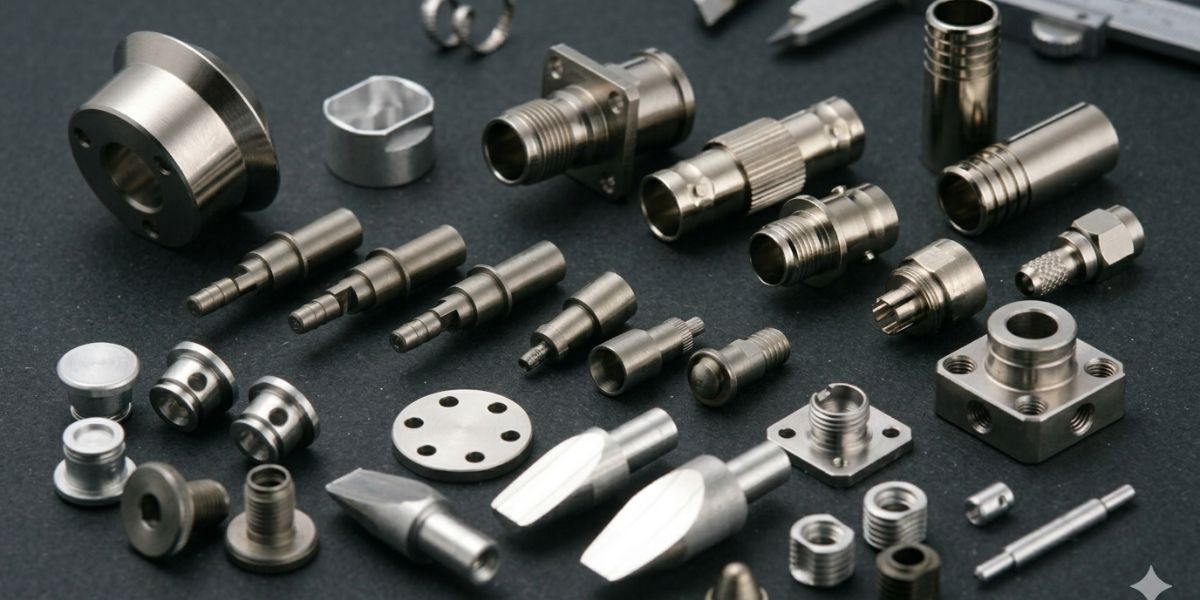
Common carbide components include:
- Carbide pins
- Wear parts
- Bushes and sleeves
- Inserts and turning tools
- Dies and punches
- Precision nozzles
- Cutting and machining tools
Many industries also use specialized carbide machining components and turning tools designed for high-precision manufacturing operations where dimensional accuracy is critical.
Why Carbide Components Are Becoming Essential
The demand for tighter tolerances and faster production cycles has increased significantly over the last decade. Manufacturers can no longer rely solely on conventional tooling materials if they want to maintain quality and efficiency at scale.
Carbide materials provide several advantages that directly address modern manufacturing challenges.
Exceptional Hardness and Wear Resistance
One of the primary reasons carbide components manufacturing has gained importance is the material’s outstanding hardness. Tungsten carbide is significantly harder than most tool steels, allowing it to resist abrasion and maintain precise dimensions over extended operating periods.
In high-volume production environments, wear-resistant components help minimize tool degradation and reduce the frequency of replacements. This improves machine uptime and helps manufacturers maintain consistent product quality.
Superior Heat Resistance
Modern CNC machining operations often involve high cutting speeds and elevated temperatures. Traditional materials may soften or deform under these conditions, leading to reduced accuracy and shorter tool life.
Carbide components retain their hardness even at elevated temperatures, making them ideal for high-speed machining applications. This thermal stability contributes to improved cutting performance and longer operational life.
Improved Dimensional Accuracy
Precision engineering industries require components that can maintain extremely tight tolerances. Carbide parts are less likely to deform under pressure or thermal stress, which helps preserve dimensional consistency throughout production runs.
This is especially important in sectors such as aerospace and medical manufacturing, where even minor deviations can affect safety and functionality.
The Role of Carbide Components in CNC Manufacturing
CNC machining has transformed the manufacturing sector by enabling highly automated and repeatable production processes. However, the efficiency of CNC systems depends heavily on the quality and durability of the tooling and machine components involved.
Carbide plays a major role in enhancing CNC manufacturing performance.
Increased Tool Life
Carbide cutting tools typically last much longer than high-speed steel alternatives. Their resistance to wear allows manufacturers to run extended machining cycles with fewer interruptions for tool changes.
Longer tool life translates directly into improved productivity and lower operational costs.
Better Surface Finish
High-quality carbide inserts and turning tools provide cleaner and more consistent cuts, resulting in superior surface finishes. This reduces the need for secondary finishing operations and helps manufacturers maintain quality standards more efficiently.
Many precision machining operations rely on industrial carbide components used in CNC turning applications to achieve consistent performance across large production batches.
Enhanced Machining Speeds
Carbide tooling allows CNC machines to operate at higher cutting speeds without compromising tool integrity. Faster machining speeds improve throughput and help manufacturers meet growing production demands.
As industries continue adopting automation and smart manufacturing practices, carbide-based tooling solutions are expected to remain essential in maintaining operational efficiency.
Applications Across Major Industries
The versatility of carbide materials has led to their widespread use across multiple industrial sectors.
Automotive Manufacturing
Automotive production requires precision-engineered components capable of maintaining consistent performance under heavy operational loads. Carbide components are widely used in machining engine parts, transmission systems, fuel injection components, and braking assemblies.
Manufacturers value carbide tooling because it helps maintain accuracy during high-volume production while reducing downtime caused by tool wear.
Aerospace Engineering
Aerospace applications involve strict quality requirements and the use of difficult-to-machine materials such as titanium and nickel alloys. Carbide cutting tools and wear-resistant parts are essential for achieving the precision required in aircraft manufacturing.
The material’s ability to withstand high temperatures and mechanical stress makes it highly suitable for aerospace machining operations.
Oil and Gas Industry
Drilling systems and industrial equipment used in oil and gas operations often operate in highly abrasive environments. Carbide wear components help extend equipment life and improve reliability under extreme conditions.
Carbide nozzles, seals, and drilling components are commonly used because of their resistance to erosion and corrosion.
Medical Device Manufacturing
Medical manufacturing requires exceptional precision and surface quality. Carbide tools are used extensively in producing surgical instruments, implants, and miniature precision components.
Their dimensional stability and durability make them ideal for intricate machining operations.
Electronics and Semiconductor Production
The electronics sector increasingly relies on precision carbide tooling for micro-machining and semiconductor manufacturing processes. As electronic devices become smaller and more complex, the demand for high-precision machining solutions continues to grow.
Benefits Over Traditional Materials
While steel and ceramic materials still play important roles in manufacturing, carbide components offer several advantages that make them preferable in demanding industrial applications.
Reduced Maintenance Requirements
Carbide components typically experience less wear over time, reducing the need for frequent maintenance and replacements. This contributes to lower operational disruptions and improved equipment reliability.
Higher Production Efficiency
Longer-lasting tools and improved machining speeds help manufacturers achieve greater production efficiency. Reduced downtime also supports better workflow continuity in automated manufacturing systems.
Consistent Quality Output
Because carbide materials maintain their dimensional stability over extended use, manufacturers can achieve more consistent production results. This is particularly valuable in industries with strict quality control requirements.
Cost Efficiency Over Time
Although carbide components may involve higher initial costs, their durability often results in lower long-term operational expenses. Fewer replacements and reduced downtime can significantly improve overall cost efficiency.
Precision Engineering and Wear-Resistant Components
Wear resistance has become increasingly important as manufacturing systems operate at higher speeds and tighter tolerances. Repeated friction, vibration, and heat exposure can rapidly degrade conventional materials.
Carbide components manufacturing addresses these challenges by producing parts capable of maintaining performance in aggressive operating environments.
Precision-engineered carbide parts are commonly used in:
- High-speed tooling systems
- Automated assembly equipment
- Industrial forming dies
- Metal cutting operations
- Precision grinding applications
The ability to withstand continuous mechanical stress without significant deformation makes carbide highly reliable for industrial applications that demand long operational life.
Sustainability and Manufacturing Efficiency
Sustainability has become an important consideration in modern manufacturing. Companies are increasingly focused on reducing waste, improving energy efficiency, and optimizing material usage.
Carbide components contribute to these goals in several ways.
Longer Operational Lifespan
Durable carbide parts require fewer replacements, which reduces material consumption and industrial waste.
Reduced Scrap Rates
Improved machining precision helps minimize production defects and material losses. Consistent tooling performance also supports better process control.
Energy Efficiency
Efficient cutting operations reduce machining time and energy consumption. High-performance tooling can also decrease the mechanical load on manufacturing equipment.
As industries continue working toward more sustainable production methods, carbide tooling solutions are likely to remain an important part of efficiency-driven manufacturing strategies.
Future Trends in Carbide Engineering
The future of carbide engineering is closely connected to advancements in automation, smart manufacturing, and material science.
Several emerging trends are shaping the next phase of carbide components manufacturing.
Advanced Coating Technologies
Modern carbide tools increasingly incorporate specialized coatings that improve wear resistance and thermal performance. These coatings help extend tool life even further in high-speed machining environments.
Customized Precision Components
Manufacturers are moving toward highly customized tooling and wear parts designed for specific applications. Advances in CNC manufacturing and digital design technologies make it easier to produce tailored carbide solutions.
Integration with Smart Manufacturing
Industry 4.0 technologies are enabling better monitoring of tool wear and machining performance. Carbide tooling systems integrated with sensor-based monitoring may help manufacturers predict maintenance needs more accurately.
Improved Powder Metallurgy Techniques
Innovations in powder processing and sintering technologies are helping manufacturers produce carbide components with improved density, strength, and microstructural consistency.
These developments are expected to further enhance the role of carbide materials in high-performance industrial manufacturing.
Conclusion
The increasing demand for precision, durability, and production efficiency has made carbide materials an essential part of modern manufacturing. From CNC machining and aerospace engineering to automotive production and industrial tooling, carbide components continue to support industries that rely on consistent high-performance operations.
The importance of carbide components manufacturing lies not only in the material’s hardness, but also in its ability to improve reliability, maintain dimensional accuracy, and reduce long-term operational costs. As manufacturing technologies continue evolving, the need for wear-resistant and precision-engineered components is expected to grow even further.
Manufacturers that invest in durable tooling systems and advanced carbide engineering solutions are better positioned to meet the demands of modern industrial production while maintaining quality and efficiency across increasingly competitive markets.
Author Bio
Kuldip Attri – CEO of Attri Tech Machines
Kuldip Attri is the CEO of Attri Tech Machines and has extensive experience in precision manufacturing, CNC machining, and industrial carbide component development. Over the years, he has worked closely with engineering and manufacturing sectors to support the production of high-precision machining parts, wear-resistant components, and tooling solutions for demanding industrial applications. His insights focus on manufacturing efficiency, material performance, and practical advancements in modern machining technologies.