





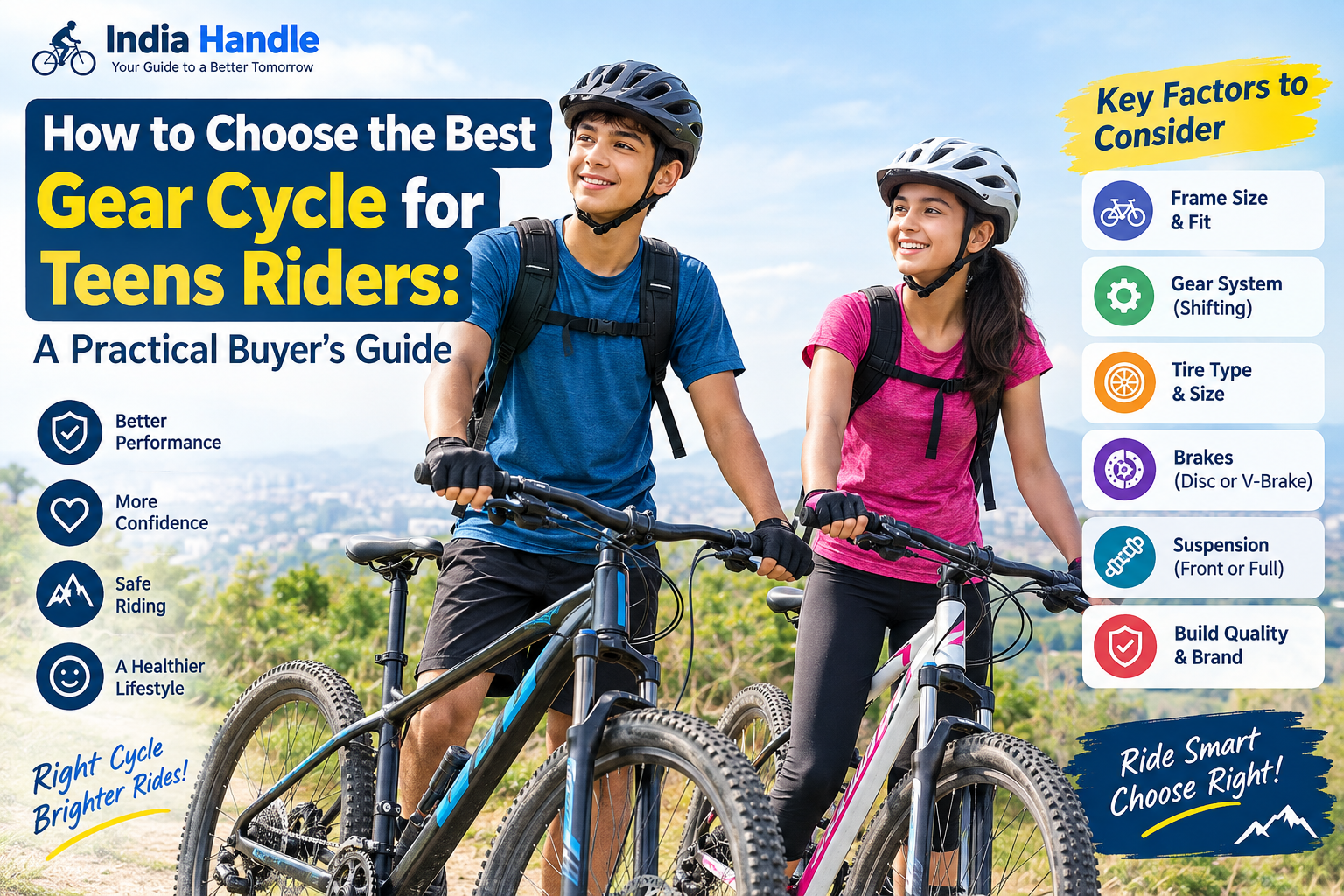
You’ve decided it’s time to get back on a bike, or maybe to ride for the first time in years. You walk into a shop or open an online catalog, and suddenly you’re facing dozens of options: different frames, wheel sizes, gear counts, and price tags. Everyone seems to have an opinion, and the jargon doesn’t help.
Buying a bicycle for teens should be exciting, not exhausting. This guide breaks down what actually matters when choosing the best gear cycle, so you can pick confidently and ride happily.
The Opening Problem: Why Most Teens Choose the Wrong Bike
Many first-time buyers make the same mistakes. They buy the cheapest option and end up with a heavy, uncomfortable ride. Or they chase the most gears, assuming “more is better,” and pay for features they never use. Others pick a bike because it looks good in photos, only to find the frame is too big, the seat is painful, or the terrain in their neighborhood demands something completely different.
The result is a bicycle that sits unused in the corner of the garage. The goal isn’t to buy the fanciest bike. It’s to buy the right one for how, where, and how often you’ll ride.
Educational Section: Understanding Gear Cycles
A gear cycle uses a drivetrain with multiple gear ratios, letting you adjust how hard you pedal relative to your speed. Think of gears as your bike’s way of managing effort.
Low gears make pedaling easier. They’re ideal for climbing hills, riding against the wind, or starting from a stop.
High gears make each pedal stroke cover more ground. They’re best for flat roads and downhill stretches where you want speed.
Here are the main components worth understanding:
- Frame material: Steel is durable and smooth but heavier. Aluminum is lighter and rust-resistant, making it popular for most adult bicycles. Carbon is very light but expensive.
- Gear systems: Most gear cycles use either a derailleur system (visible gears at the rear wheel, common on mountain and road bikes) or an internal hub system (enclosed, low maintenance, found on some city bikes).
- Brakes: Rim brakes are simple and affordable. Disc brakes offer stronger, more consistent stopping, especially in wet weather.
- Suspension: Front suspension absorbs bumps on rough paths. If you ride mostly on smooth roads, you can skip it and save weight.
- Tires: Wide, knobby tires suit trails; slim, smooth tires roll faster on tarmac; medium hybrid tires handle both.
Practical Selection Framework: Five Questions to Ask Before You Buy
Instead of comparing endless specifications, work through these five questions.
1. Where will you ride most?
Daily commuting on city roads, weekend trails, or fitness rides on highways each call for different bikes. Be honest about your typical route, not your most ambitious one.
2. How hilly is your area?
If you face regular inclines, look for a wider gear range, such as 21 gears or more. For flat terrain, fewer gears (6 to 7) can be perfectly adequate and simpler to maintain.
3. What’s your budget, including accessories?
Set aside around 10 to 15 percent of your budget for essentials: a helmet, lights, a lock, and a basic repair kit.
4. What’s your fitness goal?
For general fitness and leisure, a comfortable hybrid works well. For performance and distance, consider a lightweight aluminum frame with a smooth drivetrain.
5. Does it fit your body?
Frame size matters more than almost any other spec. When you sit on the saddle, you should be able to place the balls of your feet on the ground, and your knees should have a slight bend at the bottom of each pedal stroke.
Example: Matching Riders to Bikes
Consider three adult riders.
Priya, the city commuter, rides 8 kilometers to work on mostly flat roads with occasional potholes. A hybrid bicycle with 7 to 21 gears, mudguards, and a comfortable upright position suits her best. She doesn’t need heavy suspension, but reliable brakes and puncture-resistant tires are worth the investment.
Rahul, the weekend explorer, loves riding on uneven village roads and light trails. A mountain-style gear cycle with front suspension, wide tires, and 21 to 27 gears gives him the control and climbing ability he needs.
Meera, the fitness enthusiast, rides 25 kilometers three mornings a week on smooth highways. A lightweight road or fitness bike with a narrow tire profile and a smooth, efficient drivetrain will help her ride faster with less fatigue.
Three riders, three different answers. None is wrong, because each matches the bike to the ride.
Trust and Buying Guidance
Before you commit, take a few smart steps.
- Test ride whenever possible. Ten minutes on a bike reveals more than ten product pages. Check comfort, gear shifting, and braking response.
- Inspect the build quality. Look for clean welds, smooth gear changes, and properly aligned wheels.
- Check warranty and service access. A bicycle is only as good as the support behind it. Choose a brand with a dealer network and spare parts available near you.
- Read genuine owner reviews. Look for patterns in feedback about durability and after-sales support rather than focusing on a single glowing or negative comment.
- Avoid overbuying. A well-built mid-range gear cycle usually serves a recreational rider far better than a high-end race bike.
Also remember that maintenance matters. Lubricate the chain regularly, keep tires properly inflated, and get a basic service every few months. A well-maintained bike lasts years longer and rides noticeably better.
Take the Next Step
Choosing the best bicycle for Teens doesn’t have to be complicated. Start with your terrain, your goals, and your budget, then narrow your options with a test ride. If you’re ready to explore well-built, reliable options with wide service availability, take a look at the range from Hero Cycles, a trusted name in Indian cycling, and see which model fits your riding style. Whichever bike you choose, the best one is the one that gets you out riding again and again.